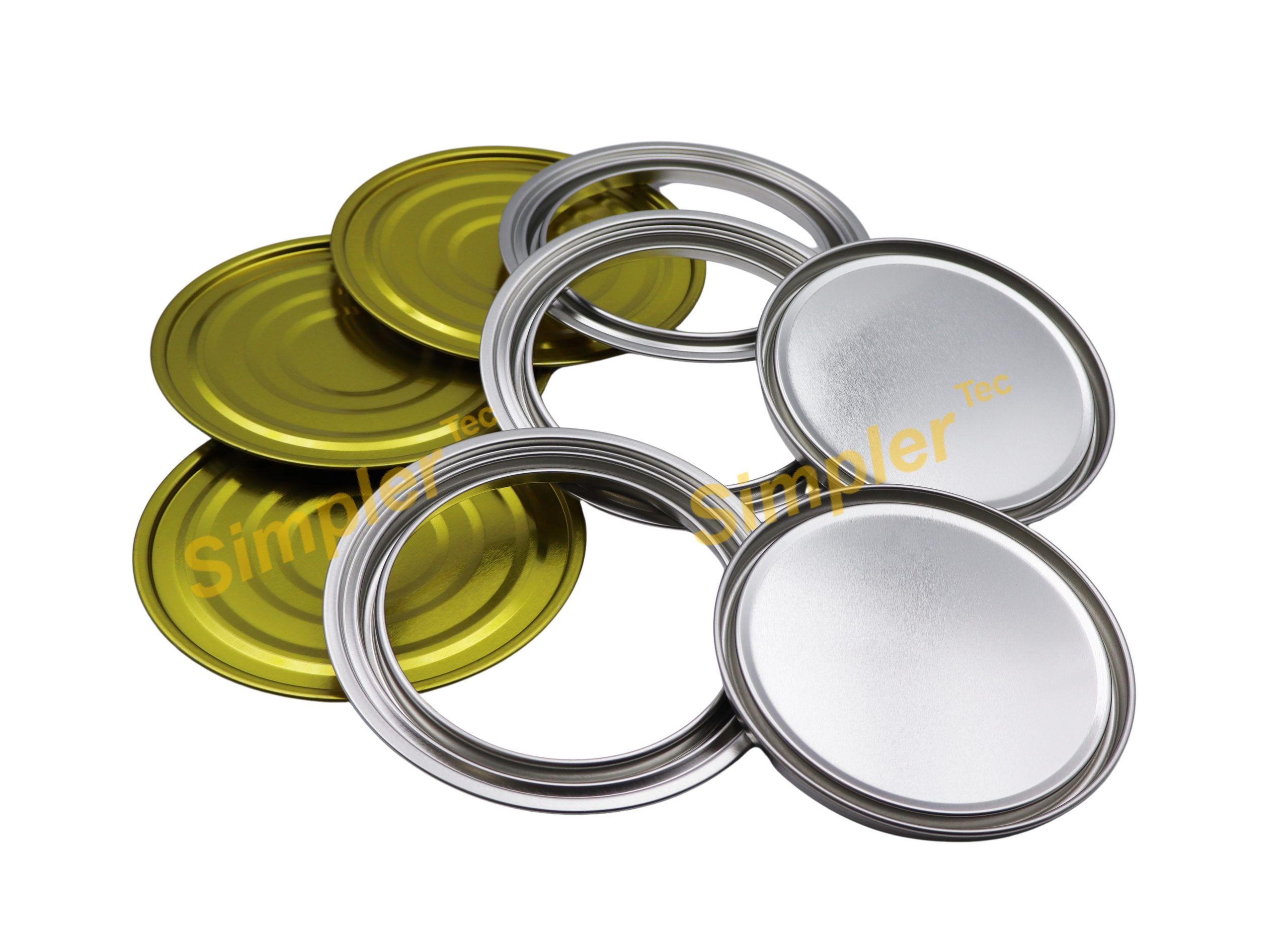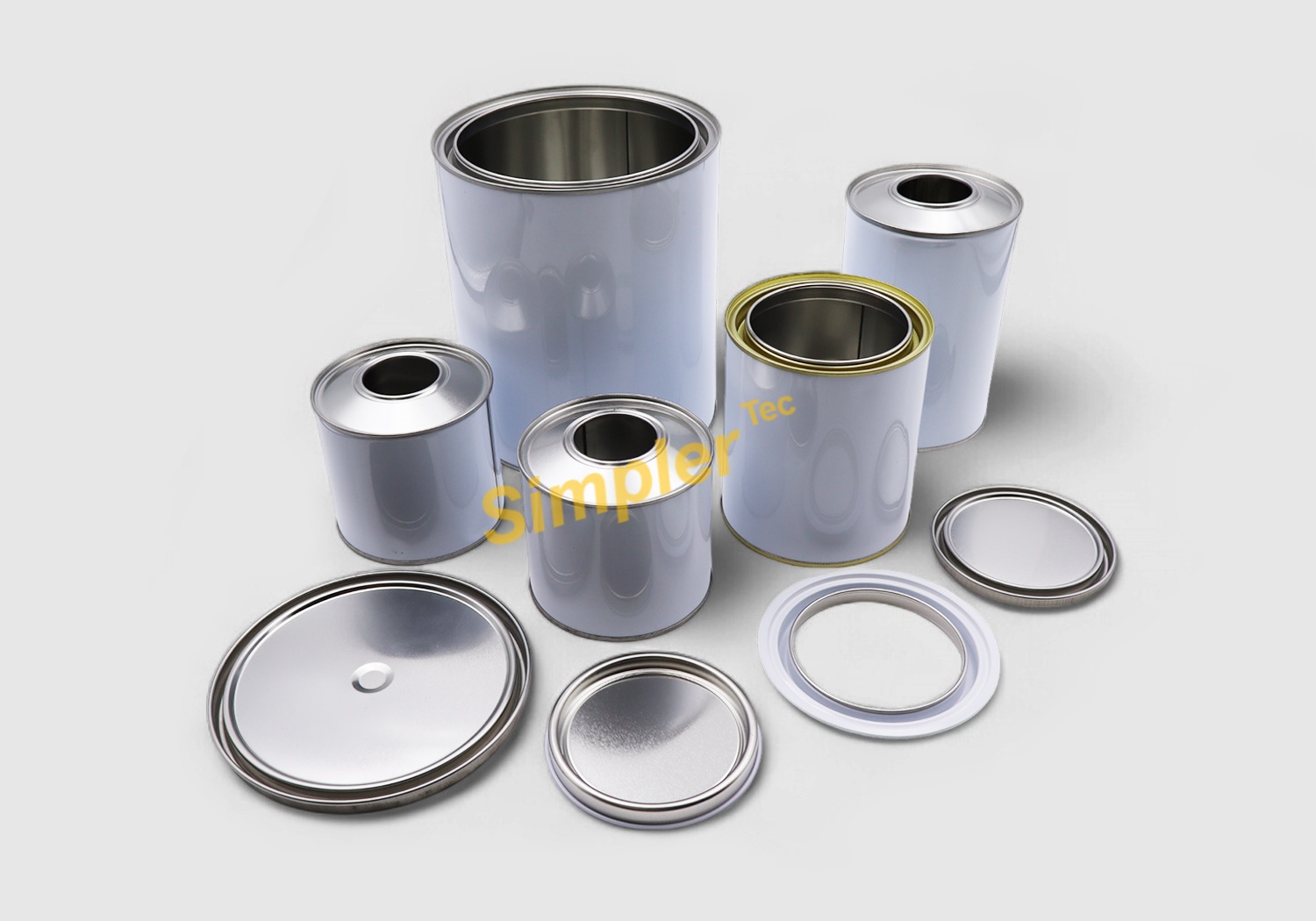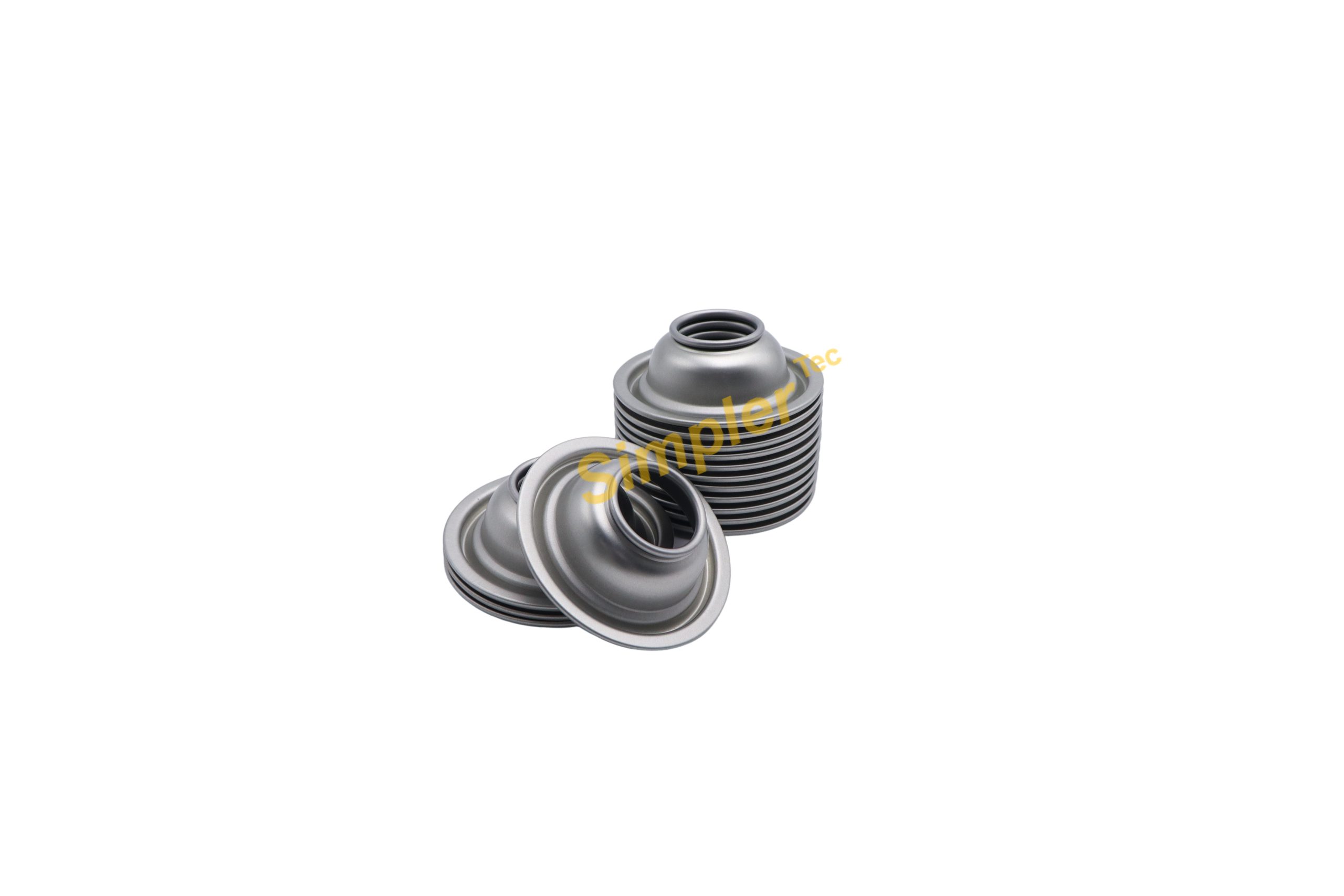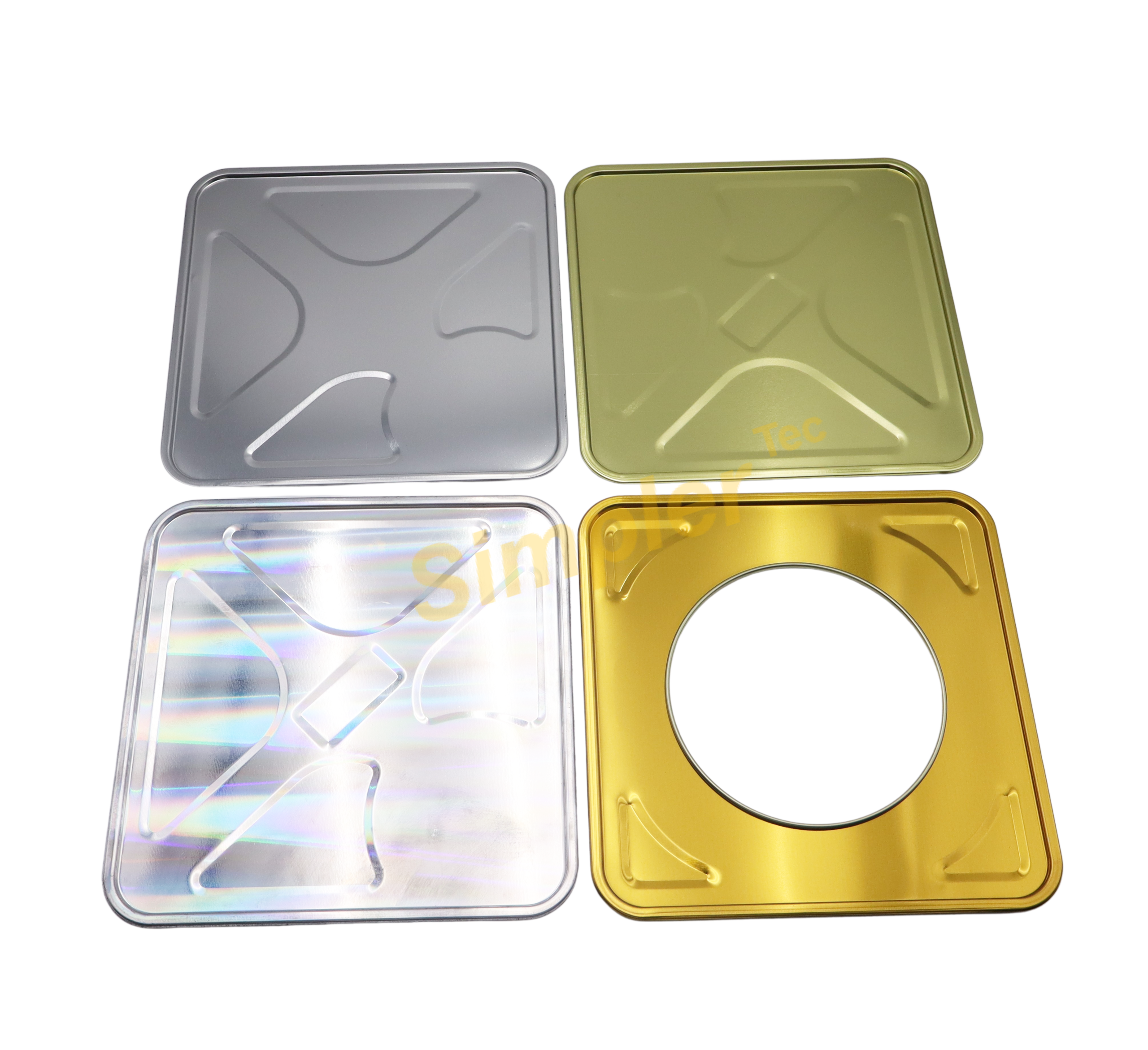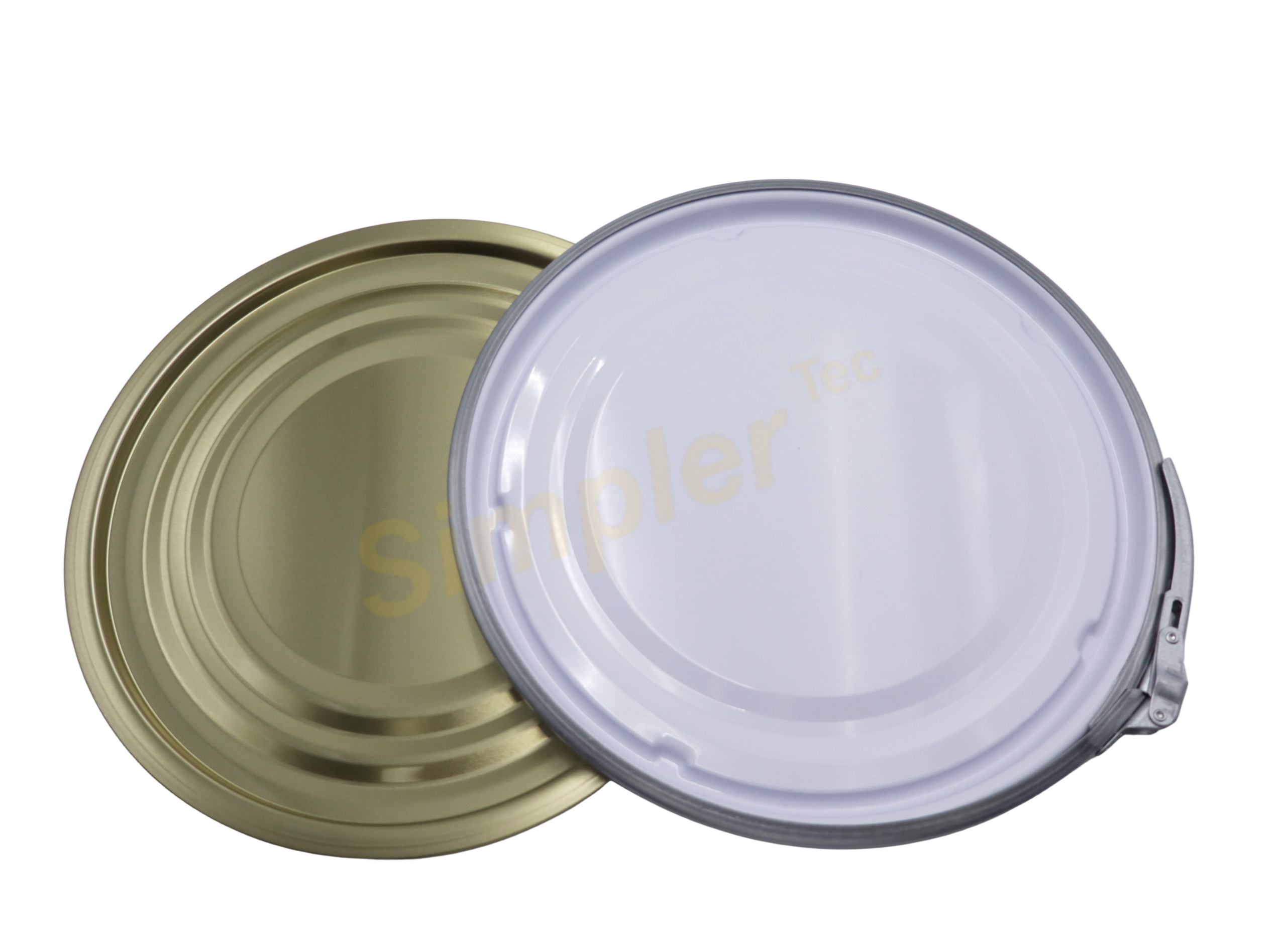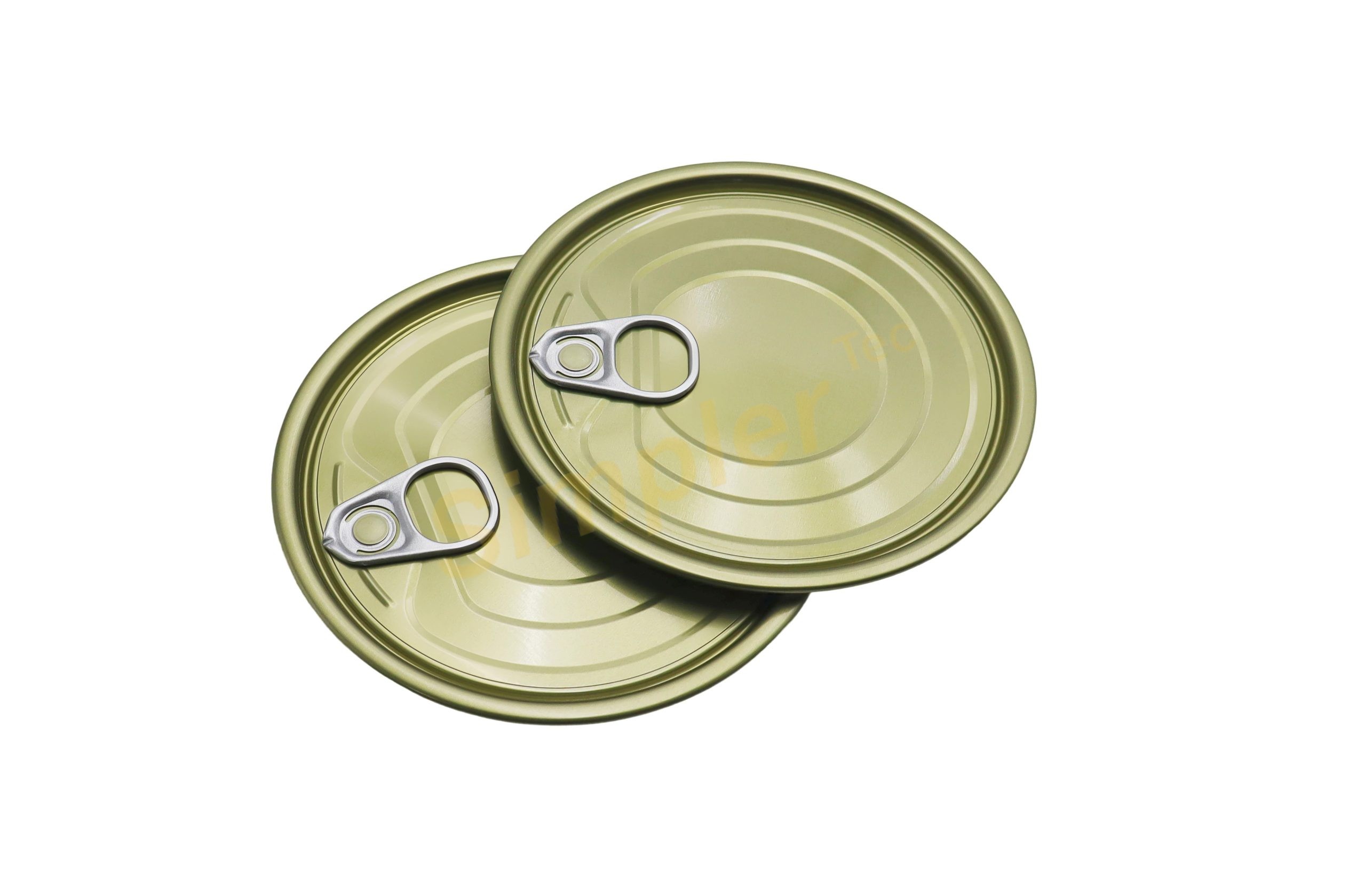
The production process of tinplate can packaging fittings, including lids, rings, and bottoms, involves several key stages focused on these components:
1. Raw Material Preparation
– Tinplate Selection: High-quality tinplate sheets are sourced and coated to enhance corrosion resistance and food safety.

2. Sheet Cutting
– Blank Cutting: Tinplate sheets are die-cut into shapes for lids, bottoms, and rings, ensuring uniformity.
3. Forming
– Lid Formation: Lids are stamped or drawn into a dome shape for sealing and structural integrity.
– Bottom Formation: Bottoms are similarly stamped or drawn to achieve strength.
– Ring Formation: Rings are formed to fit securely around the can body.

4. Welding and Seaming
– Welding: Some components may be welded or mechanically fastened for durability.
– Seaming: Rings and lids create a double seam with the can body for an airtight seal.

5. Surface Treatment
– Cleaning and Coating: Components are cleaned and may receive protective coatings to enhance corrosion resistance.
6. Printing and Decoration
– Branding: Lids and rings can be printed with logos and information using various printing techniques.
7. Quality Control
– Inspection: Each component undergoes rigorous quality checks to ensure they meet performance and safety standards.
8. Packaging
– Final Assembly and Packaging: Finished fittings are packaged for distribution, often in bulk or kits, for assembly with can bodies.

Overall, the production of tinplate can packaging fittings ensures robust and reliable components that effectively seal and protect contents, enhancing overall performance.
We Simpler are dedicated to providing high-quality tinplate can components that enhance product performance and reliability. Our expertise, advanced manufacturing capabilities, and commitment to sustainability position us as a leader in the packaging industry, ready to meet the evolving needs of our customers.